
Quick answer:
Until you can see a dentist, rinse with warm salt water, floss gently around the tooth, use a cold compress on your cheek, and take an over-the-counter pain reliever as the label directs. Don’t put aspirin on your gums. Swelling with fever, or trouble breathing or swallowing, needs the ER right away.
It usually starts small. A twinge when you drink something cold. Then, a day or two later, a dull throb that keeps you up at night.
You search for what to do and find a long list of home remedies, some sensible and some not. What you really want to know is how to get through tonight, and how worried you should be.
The simple answer is that a few safe steps can take the edge off the pain until you’re seen.
The more honest answer is that home care only buys time. A toothache is a signal that something inside or around the tooth needs attention, and most causes don’t go away on their own.
Pain relief at home is a bridge to a dentist, not a replacement for one.
What can I do for a toothache right now?
- Rinse with warm salt water. About half a teaspoon of salt in a glass of warm water. Swish and spit. It cleans the area and can soothe irritated gums.
- Floss gently around the tooth. A piece of food wedged between teeth can cause surprising pain.
- Use a cold compress. Hold it on the outside of your cheek for 15–20 minutes at a time to ease throbbing and swelling.
- Take an over-the-counter pain reliever as the label directs (more on this below).
- Keep your head raised when you lie down. Many people find the throbbing is worse lying flat.
- Avoid very hot, very cold or sugary food and drinks, and chew on the other side.
What is the best pain reliever for a toothache?
For adults with dental pain, the American Dental Association’s guideline recommends nonsteroidal anti-inflammatory drugs (NSAIDs) such as ibuprofen or naproxen, alone or combined with acetaminophen, as the first choice (Carrasco-Labra et al., 2024). The same guideline advises against opioids as a first option.
Follow the label for dose and timing, and don’t go over the daily limit. NSAIDs aren’t right for everyone, including some people with stomach ulcers, kidney disease, heart conditions or who take blood thinners, and acetaminophen can harm the liver in high doses. If you aren’t sure what’s safe for you, ask a pharmacist.
Swallow pain relievers. Never hold them against the tooth.
What should you not do with a toothache?
- Don’t put aspirin on your gum or tooth. It doesn’t work that way and can cause a painful chemical burn to the gum tissue (Kawashima et al., 1975).
- Don’t use heat on a swollen face. Use cold instead.
- Don’t ask for leftover antibiotics. Antibiotics don’t relieve most toothaches. A guideline panel found they generally aren’t recommended for tooth pain without signs of spreading infection, such as fever or swelling beyond the tooth (Lockhart et al., 2019). A review of the evidence also found little support for antibiotics as pain relief for these teeth (Cope et al., 2018).
- Don’t wait it out because the pain stopped. Pain that suddenly fades can mean the nerve inside the tooth has died, while the infection remains.
Do home remedies like clove oil help a toothache?
Clove oil contains eugenol, which has a numbing effect, and many people find it gives short-term relief. Dentists have long used eugenol in some temporary dressings. But store-bought clove oil hasn’t been well studied as a toothache treatment, and undiluted oil can irritate the gums.
If you try it, dab a small amount, diluted, on a cotton ball and hold it near the tooth, not on the gums. Over-the-counter numbing gels can help briefly too. Neither treats the cause.
The Biggest Difference: A Toothache You Can Manage vs. One That Can’t Wait
Most toothaches are urgent but not dangerous. A few are dangerous. The difference is usually swelling and how you feel overall.
| What you notice | What it may mean | What to do |
|---|---|---|
| Short twinge with cold or sweets | Sensitivity, a small cavity or a worn filling | Book a visit soon |
| Lingering, throbbing pain, worse at night | Inflamed or infected nerve | Call a dentist within a day or two |
| Pain when biting | Cracked tooth, infection or a high filling | Call a dentist soon |
| Swollen gum or a pimple-like bump | Abscess | Call a dentist the same day |
| Facial swelling with fever, or trouble breathing or swallowing | Spreading infection | Go to the ER or call 911 |

What causes a toothache?
- A cavity that has reached the inner layers of the tooth
- An infected or inflamed nerve, which often needs a root canal
- A cracked tooth or a broken or loose filling or crown (see what to do if a crown comes loose)
- Gum infection or food trapped under the gum
- A wisdom tooth coming in or trapped
- Grinding or clenching, which can make several teeth ache
- Sinus pressure, which can feel like an ache in the upper back teeth
What We Look at Before Recommending Treatment for a Toothache
- Where it hurts and when. Cold, heat, biting or constant pain each point in different directions.
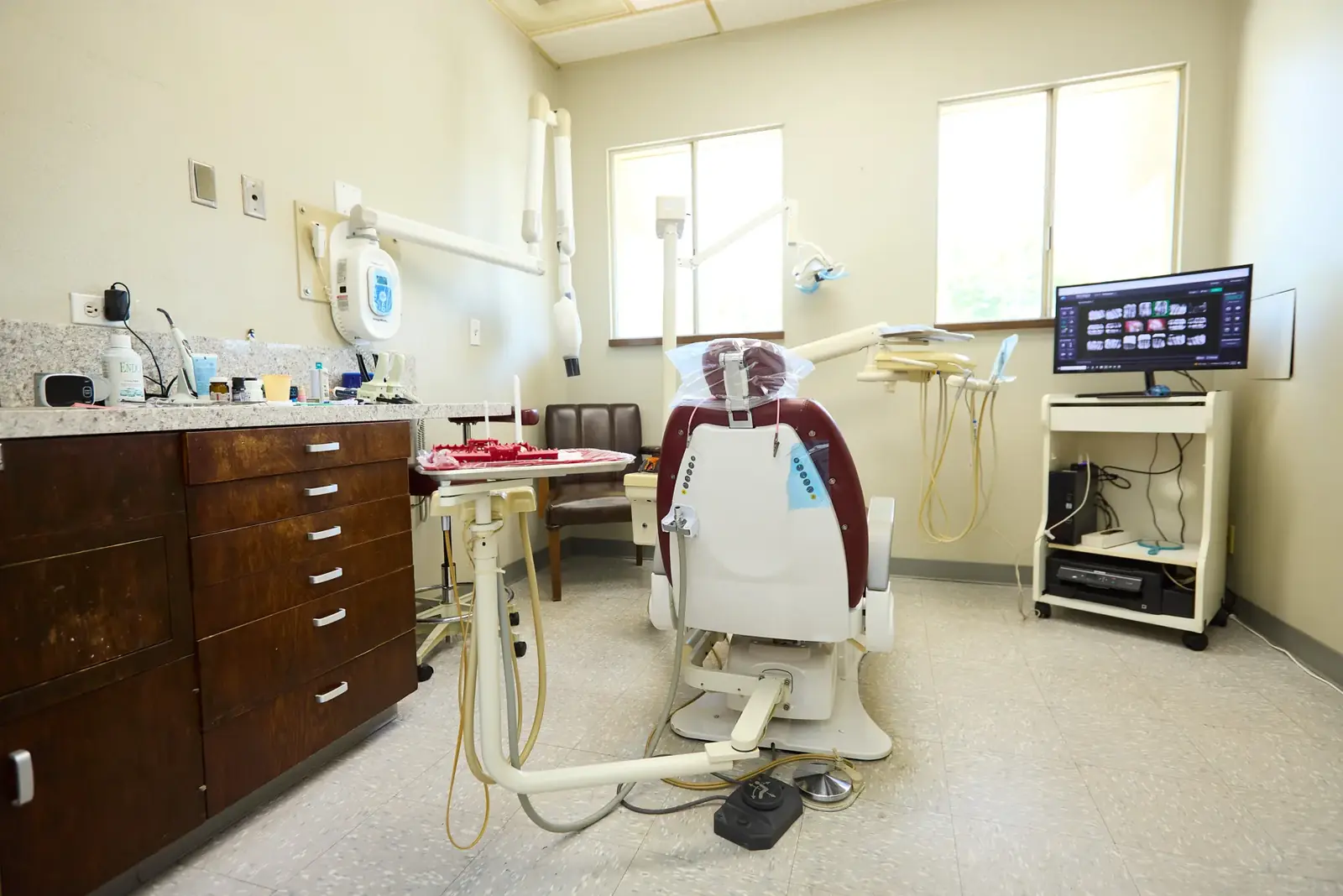
- X-rays to see decay, infection at the root tip and bone around the tooth.
- Simple tests for cold sensitivity and tenderness when tapping or biting.
- The gums around the tooth for swelling or deep pockets.
- Cracks and the condition of old fillings and crowns.
- Your health history, including medications that affect treatment.
Depending on what we find, the fix may be a filling, a root canal, a crown, gum care or, when a tooth can’t be saved, an extraction. The goal is to treat the cause and keep your tooth when it’s possible.
What happens if you ignore a toothache?
A cavity that could have been a filling can grow into one that needs a root canal or crown. An infected tooth can form an abscess, and in rare cases infection spreads to the face and neck, which is a medical emergency.
Early treatment is usually simpler, quicker and less costly. Waiting rarely makes the problem smaller.
How much does an emergency dental visit cost?
At JW Dentistry, new patients can get an emergency exam and x-rays for $59. That visit tells you what is wrong and what your options cost before any treatment begins.
For patients in La Mirada, Whittier, La Habra and nearby cities, we try to see urgent problems quickly during office hours, Monday to Thursday. We work with most PPO plans and file your claims for you, and financing with Cherry is available to those who qualify.
Final Takeaways
- Rinse with warm salt water, floss gently and use a cold compress.
- Ibuprofen or naproxen, alone or with acetaminophen, is the first choice for most adults. Follow the label.
- Never put aspirin on your gums.
- Antibiotics don’t fix most toothaches.
- Facial swelling with fever, or trouble breathing or swallowing, means the ER.
- Pain that stops on its own can still mean an infection. Get it checked.
Have a toothache now? Call (562) 947-2555. We’ll find you the earliest time we can and tell you the cost before treatment begins.